
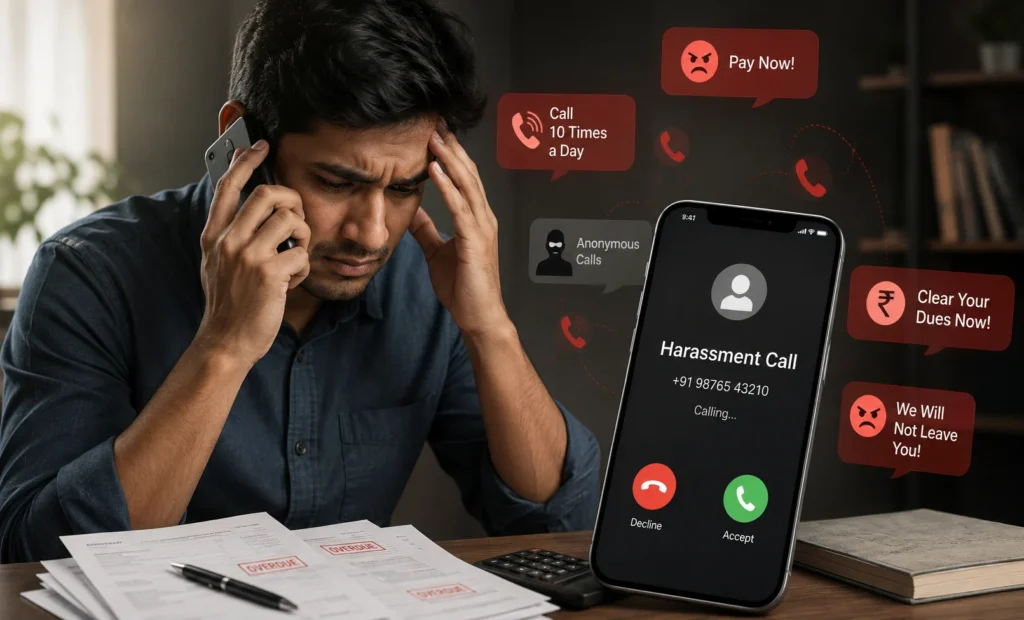
Harassment calls from recovery agents are stressful enough on their own. But when those calls come after 7pm, turn threatening, or start targeting your family and neighbours, you are no longer dealing with a normal collections process — you are dealing with a violation of Indian law. This guide breaks down exactly which rules recovery agents break when they make harassment calls, the evidence you need to prove it, and the step-by-step complaint process that actually gets the calls to stop for good.
Harassment Calls Are Not “Just How Recovery Works”
Many borrowers assume that rude calls, repeated threats, and family shaming are a normal, if unpleasant, part of owing money. They are not. Every bank, NBFC, and licensed lender in India is bound by the Reserve Bank of India’s Fair Practices Code, and every individual is protected by the Indian Penal Code and the Constitution’s right to privacy. Recovery agents who ignore these protections are breaking the law, not just being unprofessional.
The Exact Laws Recovery Agents Are Breaking
Before you file any complaint, it helps to know precisely which rule has been broken. Cite these when you write to the lender, the ombudsman, or the police.
- RBI Fair Practices Code (calling hours): Banks and NBFCs are directed to contact borrowers only between 8:00 am and 7:00 pm. Calls outside this window are a direct violation reportable to the lender’s compliance department.
- RBI guidelines on third-party contact: Recovery staff are not permitted to discuss your loan, balance, or default status with family members, neighbours, colleagues, or your employer. They may only use a third party to obtain your contact details, nothing more.
- Section 503 & 506, Indian Penal Code (criminal intimidation): Threatening you with injury, harm to reputation, or harm to property to force repayment is criminal intimidation, punishable with imprisonment.
- Section 499, Indian Penal Code (defamation): Telling relatives, neighbours, or coworkers that you are a “defaulter” or a “cheat” can constitute defamation.
- Section 354D and related provisions: Repeated unwanted contact, monitoring, or following can qualify as stalking or harassment under criminal law.
- Right to Privacy, Article 21 of the Constitution: The Supreme Court’s Puttaswamy judgment recognises privacy as a fundamental right, which limits how far a lender can go in pursuing recovery.
- TRAI regulations on unsolicited communication: Excessive or repetitive calling from unregistered numbers can also breach telecom customer-preference rules.
Step 1: Document Everything Before You Complain
A complaint without evidence is just a claim. A complaint with evidence gets action. Start a simple log the moment the harassment begins.
- Call recordings: Most smartphones can record calls; keep them saved with the date and time in the file name.
- Call log screenshots: Capture the number, frequency, and timestamps of every call, especially those after 7pm or before 8am.
- Messages: Save every threatening SMS, WhatsApp message, or email exactly as received, including sender details.
- A harassment diary: Note the date, time, caller’s name, agency name, and a short summary of what was said for every single contact.
- Witness statements: If an agent visited your home or spoke to a neighbour or employer, get a short written statement from anyone who witnessed it.
- Agent identification: Always ask for the agent’s name, employee ID, and the recovery agency’s name before the call ends.
Step 2: Send a Written Objection to the Lender First
Before escalating externally, send a written email or letter directly to the lender’s grievance redressal officer. State clearly that you want all further communication in writing, cite the specific dates and times of the violations, and reference the RBI Fair Practices Code. This written objection becomes an important piece of evidence, and it starts the clock on the lender’s legal duty to respond.
Step 3: Escalate Through the Right Channel
If the lender does not resolve the issue within a reasonable time, or the harassment continues, escalate in this order.
- Internal Grievance Redressal Officer: Every regulated lender must publish this contact on their website; this is your first formal escalation.
- RBI Complaint Management System (cms.rbi.org.in): If the lender fails to respond within 30 days, or you are unsatisfied with the response, file directly with the RBI Ombudsman through its online portal.
- Local police complaint: For direct threats, intimidation, or visits that frighten your family, file a First Information Report or a written complaint at your local police station citing IPC Sections 503 and 506.
- National Cyber Crime Reporting Portal: If harassment happens over calls, messages, or social media in a way that involves data misuse or online abuse, file a report at cybercrime.gov.in.
- Consumer forum: Under the Consumer Protection Act, you can claim compensation for mental agony and harassment caused by unfair recovery practices.
Step 4: What Your Complaint Must Include
A strong complaint is specific, evidenced, and asks for a clear outcome. Structure it with these elements.
- Your full name, loan or account number, and lender name
- A clear timeline of incidents with exact dates and times
- The names or IDs of the recovery agents involved, where known
- Copies of recordings, screenshots, and your harassment diary as attachments
- The specific law or guideline you believe was violated
- The outcome you want: an immediate stop to the calls, written communication only, and/or compensation
What Happens After You File
Once a formal complaint reaches the RBI Ombudsman or the police, the lender faces real consequences for ignoring it, including reputational scrutiny, regulatory penalties, and potential suspension of the recovery agency’s mandate. Most harassment stops almost immediately once a lender realises a documented, dated, evidence-backed complaint has been filed with a regulator rather than just a verbal objection.
Frequently Asked Questions
Can recovery agents visit my home at any time?
No. Visits should also respect reasonable hours and cannot involve intimidation, gathering a crowd, or contacting neighbours about your debt.
Can they legally call my family or employer?
They may only use a third party to obtain your updated contact number. They cannot disclose loan details, default status, or demand repayment from anyone but you.
What if the calls continue after I file a complaint?
Keep logging every incident and submit a follow-up complaint referencing your original complaint number. Continued harassment after a formal complaint strengthens your case significantly.
You Have More Power Than You Think
Debt does not strip you of your legal rights. Recovery agents who call at odd hours, threaten you, or shame you in front of family are stepping outside the law, and a well-documented complaint is often all it takes to make them stop permanently. If you need help building your complaint or negotiating a fair repayment plan, The Debt Rescuers is here to guide you through every step. For a full breakdown of what you are entitled to beyond stopping harassment calls, read our complete guide to your borrower rights.